Monday, 15 April 2013

Industrialization and Immigration


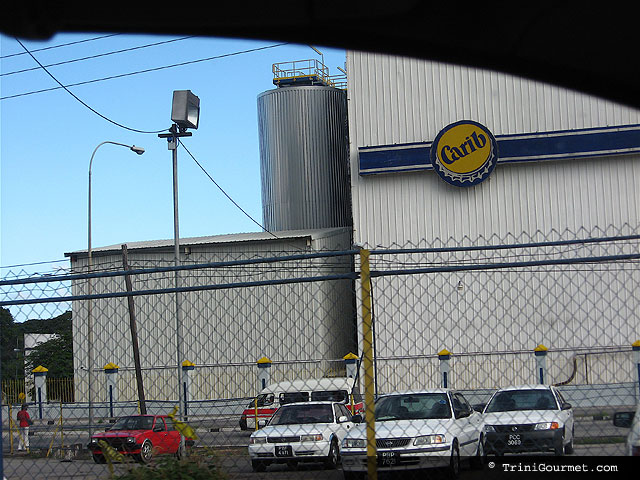
The photos shown in this post is of the Carib and Stag beer company in Trinidad and Tobago. I took them from inside a bus while traveling from Port Of Spain to St. Augustine. The first is of the distillery and the second one is of a storage area across the road where they store empty beer cases. I chose to take these photos because alcohol is an important product in urban settings and has become and important part of urban lifestyles. Also companies of that magnitude generate a large work force of skilled and unskilled laborers of which a huge part of the unskilled laborers are immigrants from a different country.

Immigration, Urbanization, and Industrialization are directly related. Immigration causes urbanization, which causes industrialization, but industrialization also causes immigration and urbanization. These three things work in a cycle. The ever increasing number of factories created an intense need for labor, convincing people in rural areas to move to the city. City growth is mainly driven by economic development and is characterized by a shift away from a predominantly agrarian-oriented economy to one that is dominated by the industrial and service sector in terms of the country's GDP and workforce. Fundamental changes in the socio-economic environment of human activities as urbanization involves new forms of employment, economic activity and lifestyle have been observed. Thus, industrialization in the developing world is directly correlated with urbanization.

Immigration causes an influx of people into a given cities or cities, as the  immigrants generally look towards cities because of jobs. Most of the times immigrants are very poor, and very desperate for work, so  they would relocate to an area with lots of job opportunities, and they would take whatever jobs they could find in order to feed themselves and there families. often times the people hiring them would pay t very little to them  because they know there situation and would take advantage of it which does not help them at all. Urbanization exists because of the increasing population, and migration of people into urban areas, which in turn leads to the success of  industrialization. Immigration is responsible for diversity in ethnicity,for new ideas, inventions, and innovations because it promotes the influx of skilled and unskilled people from all walks of life. With more people comes there is a demand for new thing and larger quantities of needed goods to make day to day life easier which increases the need for industrialization. They grow because of each other, because they all benefit from one another. A major industry created in the Caribbean and a portion being placed in Trinidad and Tobago is the University of the West Indies. It generates a considerable amount of revenue each year from countries and people all over the world and it integrates many different cultures through migration for educational purposes. Through an abundance of natural gas Trinidad is a targeted place to place a large factory due to low energy cost thus it surely attracts its fair share of immigrants each year.

Sunday, 14 April 2013

public transport


This picture was taken at the bus and maxi station in Port Of Spain Trinidad and Tobago around 4 o'clock pm on a Friday afternoon, just before most people get off work and would be rushing to go home. I've been at this central terminal a number of times unfortunately during rush hour and even though they have a better system than most country i have been in, the system still is flawed and leads to confusion and madness. This is definitely an urban lifestyle as you wouldn't or would rarely see that in a rural setting.
With an increase in population growth and an increase in the number of businesses establishment in Port Of Spain Trinidad and Tobago, there is a definite increase in the influx of people in and out of the city daily. Therefore whether we're talking about passengers or goods, the transport sector is still experiencing strong growth each year. Moreover, transport is 98% dependent on oil which Trinidad and Tobago has an abundance in, which should in turn make public transport cheaper and more reliable. However public transport is affordable but still not yet reliable. 
Historically, movements within cities tended to be restricted to walking, which made medium and long distance urban linkages rather inefficient and time-consuming. At the other end of the spectrum, the dispersed urban forms of Trinidad and Tobago, which were built recently, encourages automobile dependency and are linked with high levels of mobility. The major cities are also port cities with maritime accessibility playing an enduring role not only for the economic vitality but also in the urban spatial structure with the port district being an important node.
The more radical the changes in transport technology have been, the more the alterations on the urban form. Among the most fundamental changes in the urban form is the emergence of new clusters expressing new urban activities and new relationships between elements of the urban system. In the city of Port Of Spain, the central business district, is still the primary destination of commuters and serviced by public transportation,and  has not been changed by new manufacturing, retailing and management practices as yet, but most industries are located in more rural area, while commercial zones and most social businesses are still in or around the cities. 
Although transportation systems and travel patterns have changed considerably over time, one enduring feature remains that most people travel between 30-40 minutes in one direction. Globally, people are spending about an hours and a half per day commuting, wherever this takes place in a low or a high mobility setting. Different transport technologies, however, are associated with different travel speeds and capacity. As a result, cities that rely primarily on non-motorized transport tend to be different than auto-dependent cities. Transport technology thus plays a very important role in defining urban form and the spatial pattern of various activities. Still, the evolution of the urban form is path dependent, implying that the current spatial structure is obviously the outcome of past developments, but that those developments were strongly related to local conditions involving to the setting, physical constraints and investments in infrastructures and modes.
The amount of urban land allocated to transportation is often correlated with the level of mobility. In the pre-automobile era, about 10% of the urban land was devoted to transportation which was simply roads for a dominantly pedestrian traffic. As the mobility of people and freight increased, a growing share of urban areas was allocated to transport and the infrastructures supporting it. Large variations in the spatial imprint of urban transportation are observed between different cities as well as between different parts of a city, such as between central and peripheral areas.This could be seen from west Trinidad to east and from central to south. The major components of the spatial imprint of urban transportation are, Pedestrian areas, which  Refer to the amount of space devoted to walking. This space is often shared with roads as sidewalks may use between 10% and 20% of a road's right of way. In central areas, pedestrian areas tend to use a greater share of the right of way and in some instances whole areas are reserved for pedestrians. However, in a motorized context, most pedestrian areas are for servicing people's access to transport modes such as parked automobiles, Roads and parking areas, which Refer to the amount of space devoted to road transportation, which has two states of activity; moving or parked. In a motorized city, on average 30% of the surface is devoted to roads while another 20% is required for off-street parking. This implies for each car about 2 off-street and 2 on-street parking spaces. 
Transit systems, such as buses share road space with automobiles, which often impairs their respective efficiency. Attempts to mitigate congestion have resulted in the creation of a bus route through the center of the area reserved to buses on a permanent basis. Transport terminals, which refer to the amount of space devoted to terminal facilities such as ports, airports, transit stations,and distribution centers. Globalization has increased the mobility of people and freight, both in relative and absolute terms, and consequently the amount of urban space required to support those activities. Many major terminals are located in the peripheral areas of cities, which are the only locations where sufficient amounts of land are available.
The spatial importance of each transport mode varies according to a number of factors, density being the most important. If density is considered as a gradient, rings of mobility represent variations in the spatial importance of each mode at providing urban mobility. Further, each transport mode has unique performance and space consumption characteristics. The most relevant example is the automobile. It requires space to move around but it also spends 98% of its existence stationary in a parking space. Consequently, a significant amount of urban space must be allocated to accommodate the automobile, especially when it does not move and is thus economically and socially useless. In large urban agglomerations close to all the available street parking space in areas of average density and above is occupied throughout the day. At an aggregate level, measures reveal a significant spatial imprint of road transportation among developed countries. 

Ghettos and slums


Photos of Lavantille Trinidad and Tobago an area know for its narrow streets and houses stocked on top of each other heading down the mountain side, high crime and violence and its high level of people living in poverty. As a non national student that was one of the first place i was told about when i arrived in Trinidad and Tobago and was firmly warned not to go into the area. After being here for almost two years i made some friends who are from the area and they don't seem so bad matter of fact they seemed nothing like the people that where described to me.

More than one billion people nowadays live as slum-dwellers in informal settlements characterized by vulnerability and poverty. Rural-to-urban migration, together with the natural population growth of cities, constitutes an urbanization trend that has since accelerated its pace. The 'normal' situation in slums can, in several ways, be classified as a 'crisis', and violence levels often contribute to situations akin to 'armed conflict'. Cities are sites of great progress and prosperity in many areas, bringing wealth and opportunities to many of their citizens. However, they are also home to less advantaged groups, whose lives are characterized by poverty and a near absence of opportunity for improvement.

Their vulnerability is generally greater, as they are more exposed to and affected by natural disasters and forms of urban violence than the more affluent sections of the cities. Moreover, these vulnerabilities are chronic and increasingly severe. The opportunities and progress that cities provide act as a magnet for many who aspire to reap the benefits. Millions of people are drawn by the prospect of a better life, in which they can share in the opportunities that the city offers.

Economic prospects are the most important factor underlying urban influx. In many cases the rural-to-urban flow is stimulated by the dire situation in rural areas, where poverty and lock of progress drive people out of their habitat. As it is often the younger people who look for new opportunities, these push-and-pull trends in many cases create a vicious circle that leads to even greater rural deprivation. At the same time many city dwellers, in their struggle to seize urban opportunities, become and remain trapped in a vicious circle of poverty and vulnerability, and their deprivation can in fact be worse than in rural areas.

Within most cities, the image of progression is offset by the presence of growth of areas with a high concentration of poverty and destitution.  The rural-to-urban migration is largely made up of people with low education and limited financial means. They therefore usually have no other option than to live in informal settlements, characterized by a lack of basic infrastructure and absence of services.  These areas are the locus for concentrated poverty and corresponding vulnerability and their inhabitants are exposed to multiple hazards and violence. A generally applied label is 'slum', particularly when referring to the destitute face of these areas.  The presence and rapid growth of slums underlines that they cannot be considered an unfortunate by-product of urbanization that will disappear as cities develop and the incomes of their inhabitants improve. Instead, it needs to be addressed as a development issue.

The United Nations defines a slum household as a group of individuals living under the same roof in an urban area who lack one or more of the following conditions: durable housing, sufficient living area, access to improved water and to sanitation, and secure tenure. The classification of an urban flood can vary widely: a few inches of water may be considered a nuisance in a developing country (even though it may have an impact on socio-economic activities) but a disaster in a developed country – hence the notion of ‘hazardous area’ has multiple interpretations. Yet it is clear that slum-dwellers make up the poorer parts of cities, where their vulnerabilities and capacities are exposed to disaster risk both more frequently and to a greater degree of intensity, and where they experience more violence and insecurity than in the cities’ more affluent parts.
The slum areas also perform important functions for cities and, moreover, for the economic progress and social stability of countries. They provide accommodation for low-cost labor – economic development and slum growth are mutually reinforcing. Furthermore, the make-up of slums, often reflecting the ethnic, religious, and/or cultural background of their inhabitants, provides a network that can in normal circumstances, as well as in times of crisis, absorb migrant influx and mass movements of displaced people, for whom the city functions as a safe haven. It is argued, however, that rather than poverty breeding violence, violence promotes poverty by driving out capital and hampering investment and economic growth. Inequality, as perceived in the poorer communities, is cited as a more important underlying cause than poverty for the crime and violence that people experience. This inequality is manifest in unequal access to education, health care, and employment opportunities and in the limited or absent infrastructure compared to other, more affluent, parts of the city. However, although violence is not an exclusive feature of cities, the scale and severity are usually greater in urban areas. Much violence (be it, for example, intra-family, street robbery, or territorial-based gang wars) results in homicide, and data suggest that this correlates among other things with rapid rates of urbanization.

In many cities, urban crime is predominantly committed by young men – if not poverty driven, their involvement in crime is certainly a means of obtaining status and prestige.
Since the age brackets for young people (0-19 years) are disproportionately large in slum areas compared to non-slum areas, the many young slum-dwellers make ideal recruits for street gangs.
In this respect, media coverage of crime, particularly by the 'tabloids' and sensational press, reinforces distrust and contributes to increased fear and a feeling of insecurity among the general public Cultural and social values also play a role in the prevalence of violence: social networks can be powerful informal control mechanisms, with their normative structures tempering the perception of inequality.

The interwoven-ness of poverty, marginalization, and violence in the poor and neglected sections of the city fosters urban segregation ('fractured cities') and contributes to the emergence of 'no-go' areas, characterized by an 'unrule of law'. In contested areas where police and special police forces try to restore law and order, violence may involve political assassinations and can in fact turn into guerrilla and paramilitary conflict, in particular as a spill-over of economic and institutional crime when politicians resort to violence to pursue economic gains.

The security of people in slums is affected by violence as well as disaster risk, both which hamper socio-economic development and consequently obstruct people's ability to strengthen their resilience.
People need access to five vital resources for sustainable living. These resources, usually termed 'capital', together constitute their livelihood. 'Human capital' can be labor, skills, or knowledge; 'natural capital' consists of land, water, forests, and so forth; 'physical capital' can be food stocks, livestock, equipment, and the like; 'financial capital' is money (savings, loans, credit); and finally 'social capital' concerns the quality of relations between people (help from neighbors, religious organizations, NGOs, political parties, etc on the basis of common rules, norms and sanctions).
Friday, 5 April 2013

Homelessness: can't i have the basic needs of life


This is a picture of a homeless man i see everyday by U.W.I never knew where he slept until one night walking home late and i say him under this tent by a bus stop in the St.Augustine Trinidad and Tobago.

Homelessness is a growing problem in Trinidad and Tobago especially in the Capital city of Port Of Spain. One way the country and most countries try and deal with homelessness is by providing poor housing zones, but people who are homeless or living in poor housing are constantly threatened by illnesses and have a much lower life expectancy than other portions of the population. A large number of these people are migrants who come to the city with the promise of higher living standards because city residents have greater access to health care, more employment and opportunity and access to more social and cultural events or at least that's what they think or the image that were planted in there minds.

Of course there are advantages to city life, however, widespread poverty casts a shadow over the urban future, and as I have been writing vast number of people in urban areas are threatened by homelessness, health hazards and violence among other things. These things may affect the poorer portion of the urban population directly, but their indirect effects are felt by the whole society.

Homeless people are at risk from pollution and other health hazards, more so from pollution from cars, the burning of fossil fuels and industry which cause illnesses such as respiratory infections and lead poisoning.Crime and violence are other, specifically urban, problems that they face each day, this because of there constant exposure to the outside elements of the city and there survival needs. Urban violence has been growing rapidly also and homelessness is also a result of it. Poverty and social disintegration are cited as the causes of urban crime and violence.

These are not problems that must exist simply because cities exist. They are often the results of poor income distribution and bad policy and poor housing shouldn't be placed in areas of degraded land which are areas of higher health risk and devastation in case of natural disasters. Government and non governmental organization should create better policies and find more suitable areas for the more needy which in turn would reduce crime and health issues.

Thursday, 4 April 2013

Apartment complexes


The three pictures above show two different types of residences in Trinidad.  The first shows the exterior of a modern apartment building found in Trinidad, including the security fence and bars on the windows.  The second shows the interior and how the rooms are divided.  The third is the historic Boissiere house in Port of Spain.

It can be said that all the Caribbean the Caribbean territories have a particular look to them.  For Trinidad, with its Oil and industry economy and its unique geography set away from most hurricane paths, the skyline and buildings hold in them the look of a nation with the money to build and without the fear to stop them.  But do these modern architectural styles match the lifestyles of the people living in them?

For starters, let us discuss the matter of exteriors.  Port of Spain at night has the majestic look of a postmodern metropolis, with tall gleaming structures in the economic center and the glittering lights of the residential areas climbing the hills up toward the sky.  Its an image that doesn't exactly scream Caribbean, and like most urban settings the image changes depending on distance.  The city appears as a marvel of modernism, at least when viewed from the Lavantille road look out; that is to say, when the view doesn't include Lavantille itself.  Viewed in its totality, one sees a battle between nature and industry, and between the modern city and the old-fashioned island.  Trinidad’s history with architecture is as eclectic and tumultuous as the nation’s people.  Consider Boissiere house with its Italian design, English materials, and subtle Asian accents, for instance.  Moreover, consider the way the historic house was designed to take advantage of both light and movement of air.  The pagoda style roofs and stained glass on the sunnier sides of the house turn direct sunlight into aesthetically charming shade, while the tall windows and doors, as well as the amount of them allow for ample airflow.  Here is a structure and style that speak directly to life in the Caribbean.

Compare that with the style of apartments currently being built, as in the picture above.  No specialized architecture to take advantage of the natural environment.  No specialized windows, in fact there are hardly any windows at all.  These apartments are merely large storage containers for human resources.  The intention has shifted from providing comfortable spaces for families to maximizing space for housing an increasing workforce.

The interiors tell a similar story.  When one mentions an apartment some might expect a full suite including kitchen, living room, and dining rooms.  In fact, what is often the case is that the apartments being offered are in fact single occupancy rooms, with other amenities such as kitchens, dining and living rooms being shared between the occupants.  These apartments are not designed to house families and people moving from family settings to these sparse conditions are faced with no choice if they want to take advantage of the employment opportunities available in urban areas.


Sunday, 24 March 2013

mountains of waste


These are pictures of municipal solid waste on the wayside right beside a signpost "DO-NOT-LITTER" by  population of the environment and of garbage dumped on the side of a street in Port Of Spain Trinidad and Tobago. 

Urbanization is increasing all over the planet. Increasing along with it is one of the more unpleasant byproducts of urban living: municipal solid waste. Cities are centers of garbage production, and the amount of garbage they create is increasing even faster than their populations, it's rapidly becoming an environmental and economic catastrophe.

The conditions, issues and problems of urban waste management in developing countries are challenging since they are still in the transition towards better waste management. These countries such as Trinidad and Tobago currently have insufficient collection and improper disposal of wastes due to rapid population growth  through urbanization, seen in Port of Spain the capital city. One of the problems seen in developing countries that contributes significantly to waste being abandoned on street side is that  authorities in poor Third World cities seek to imitate the technology and equipment used in developed countries. That strategy is misguided and linked to corruption through kickbacks from purchases of transport fleet or from contractors. Often does not make economic and social sense for the poor.

The Country of Trinidad and Tobago has a serious municipal waste problem , everyday and everywhere I turn i see garbage whether just walking on the street or travelling to one area to the next. All along the beach sides and river banks, in fact I've seen waste in the middle of rivers such as the "Caura". One would thing a country with this little geographic range and abundance of natural gas would be able to handle it.
"Municipal solid waste management is the most important service a city provides," the report notes. "A city that cannot effectively manage its waste is rarely able to manage more complex services such as health, education, or transportation… Improving MSW is one of the most effective ways to strengthen overall municipal management and is usually a prerequisite for other, more complicated, municipal services.

Saturday, 16 March 2013

Street Vendors


These are pictures of street vendors in Port of Spain Trinidad and Tobago on April 12th 2013. The first photo is a picture of make shift stalls used to sell clothing on in the back of a lot near the sidewalk. The next one is of a vendor selling ice cone on the side of the street right outside a park in the center of Port of Spain.

With rapid urbanization, informal activities like street-food vending are increasingly becoming important livelihood activities for the urban poor as they offer employment and cheap foods. However, street-food vending in Trinidad and Tobago, as in many developing countries, faces many constraints such as poor organization, low entrepreneurial knowledge and low investments due to poor access to credit and even more importantly food safety concerns.

The term "street foods" describes a wide range of ready-to-eat foods and beverages sold and sometimes prepared in public places, notably streets.  Like fast foods, the final preparation of street foods occurs when the customer orders the meal which can be consumed where it is purchased or taken away. Street foods and fast foods are low in cost compared with restaurant meals and offer an attractive alternative to home-cooked food. In spite of these similarities, street food and fast food enterprises differ in variety, environment, marketing techniques and ownership. Street foods often reflect traditional local cultures and exist in an endless variety. There is much diversity in the raw materials as well as in the preparation of street food beverages, snacks and meals. Vendors' stalls are usually located outdoors or under a roof which is easily accessible from the street. They have low-cost seating facilities which are sometimes rudimentary. Their marketing success depends exclusively on location and word-of-mouth promotion. Street food businesses are usually owned and operated by individuals or families but benefits from their trade extend throughout the local economy. For instance, vendors buy their fresh food locally, thus linking their enterprises directly with small-scale farms and market gardens.

The "informal" sale of raw and prepared foods is a distinguishing feature of most cities in developing countries.In many cities in developing countries, a significant percentage of the population is engaged in informal employment. Much of this informal business involves the sale, processing and distribution of food. Therefore, it is an income-generating activity and a important livelihood for urbanites but often does not figure in a country's national accounts or in its official economic development policies.  In times of economic crisis, city dwellers tend to resort to the informal sector for both employment and the purchase of goods and services. You tend to find more women working in informal activities than men which is due to gender inequality or attributed to traditional gender roles. however in times of crisis you'll find bought genders on the street side.Wherever food is concerned, we are not only dealing with a topic of economic importance but also one that is of cultural and social significance. The informal food sector is a transactional sphere where one can obtain "home-cooked" food as opposed to the growing presence of "factory cooking". Many urbanites value their street foods, home-based catering networks, neighborhood markets, mobile vendors and home-made condiments that can be purchased easily in any large Third World city. Each street food enterprise is generally small in size, requires relatively simple skills, basic facilities and small amounts of capital, yet they are very numerous and have considerable potential for generating income and employment.  If it is properly managed, a healthy street food sector also improves street life because it helps to stimulate pedestrian traffic rather than automobile-oriented thoroughfares that are devoid of people. 

In Trinidad and Tobago street vendors can be seen in most major cities and some rural areas. You find them selling food, mostly doubles and gyros, selling clothing and footwear from outside a vehicle or a little stall or you find them selling drinks besides the highway or walkways. This is a direct result of lack of job opportunities and large portion of unskilled workers due to rapid population growth and increased urbanization.